
 English
 français
 español
 العربية
Поиск
Что Вы ищете?
Поиск

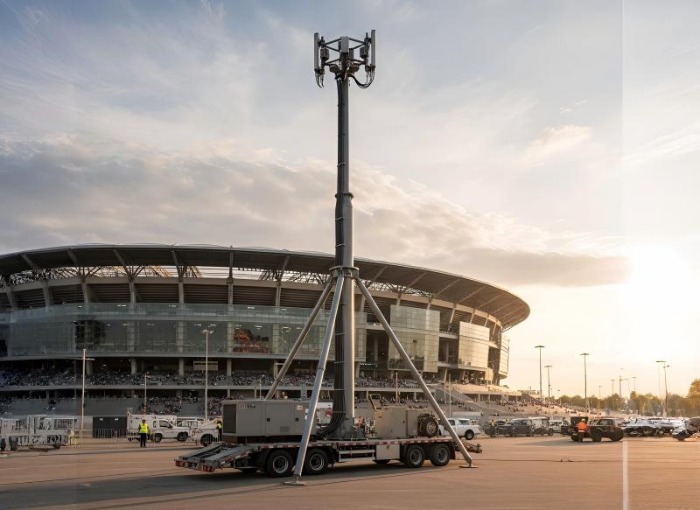
A Cellular on Wheels (COW) unit is a revenue-generating asset, not merely a cost center. Telecom operators generate returns through temporary capacity leasing to event organizers, emergency response contracts with government agencies, and multi-operator infrastructure sharing. A single COW unit costs approximately $108,000–$148,500 to purchase and can generate $500–$5,000+ per day in rental revenue depending on configuration and duration. For short-duration deployments (under 30 days), COW is the most economical solution compared to permanent infrastructure. Under a shared tenancy model, per-operator costs can drop by up to 90% compared to individual builds, accelerating ROI and enabling deployment in markets that would otherwise be commercially unviable.
· COW is the right tool for the right duration: For deployments under 30 days, COW offers the lowest total cost; beyond 90 days, movable cabins become more economical
· Two primary revenue models: Event-driven revenue (temporary capacity leasing to organizers and operators) and emergency/government contracts (public safety agencies and disaster response)
· Multi-operator sharing transforms economics: Shared tenancy on a single COW reduces per-operator CAPEX/OPEX by up to 90% through shared power, cooling, and site costs
· Market is growing steadily: The global COW market was valued at approximately $2.48 billion in 2024**, with projections reaching **$5 billion by 2035 at a CAGR of 6.6%
· Emergency deployments generate reliable returns: Government contracts for disaster preparedness provide predictable, recurring revenue. Australia's NSW government committed $2 million for four COW units with ongoing managed service fees
· Fuel is the hidden cost driver: Diesel consumption is the largest OPEX component for COW deployments—hybrid energy systems can reduce fuel costs by 60–80%
Who is searching for this information?
| User Type | Primary Intent | Key Concerns |
|---|---|---|
| Telecom operators / network planners | Evaluate COW as an investment for event and emergency coverage | ROI timeline, rental pricing, utilization rates |
| Tower companies (TowerCos) | Assess COW fleet economics under shared infrastructure model | Per-operator cost, tenancy ratios, maintenance overhead |
| Event organizers | Understand COW rental costs and coverage capabilities | Daily rates, deployment lead time, coverage area |
| Government / emergency agencies | Build business case for COW procurement or managed services | Total lifecycle cost, readiness, multi-agency sharing |
| Investors / financial analysts | Assess market opportunity and revenue models | Market size, growth rate, competitive dynamics |
Search intent summary: Users are looking for concrete financial data—purchase prices, rental rates, ROI timelines, and cost-sharing mechanisms—to support investment decisions. The underlying question is not “what is a COW?” but “does a COW make money, and under what conditions?”
1. How much does a COW cost to purchase or rent? What's the daily/monthly rental rate?
2. What is the ROI timeline for a COW investment? How quickly can an operator recover the purchase cost?
3. How do event organizers pay for COW coverage? Is it a flat fee, per-day rate, or revenue-share model?
4. Can multiple operators share a single COW? How does the cost-sharing work?
5. What government contracts are available for COW deployment? How do emergency agencies procure these services?
6. What are the operational costs? Fuel, maintenance, staffing—what's the ongoing OPEX?
7. Is COW more cost-effective than building a permanent tower? Under what conditions?
8. What's the market size and growth rate for COW? Is this a growing industry?
9. What utilization rate is needed to break even? How many deployment days per year are required?
10. What financing models exist? Purchase, rental, lease-to-own, managed service?
Overview of COW as an investment asset with multiple revenue streams.
How operators monetize COW deployment at concerts, sports events, and festivals.
Public safety contracts, disaster preparedness budgets, and managed service frameworks.
How shared tenancy transforms COW economics through cost dilution.
Purchase costs, rental rates, OPEX breakdown, and break-even analysis.
Market size, growth projections, and emerging trends.
Real-world deployment economics from Australia’s emergency COW fleet.
Answers to the most common questions about COW business models.
A COW is fundamentally a mobile capacity asset. Unlike a permanent tower—which generates revenue 24/7/365 from a fixed location—a COW’s revenue depends on deployment frequency and duration. This makes COW economics a function of utilization rate: the more days per year the unit is deployed and generating revenue, the faster the payback.
There are three primary paths to monetization:
Path 1: Operator-owned, operator-deployed. The telecom operator purchases COW units and deploys them for its own network needs—either for revenue-generating events or for customer retention during emergencies.
Path 2: TowerCo-owned, multi-operator leased. A tower company or infrastructure provider purchases COW units and leases capacity to multiple operators, similar to the tower sharing model.
Path 3: Managed service contract. A service provider (like Pivotel in Australia) owns and operates COW units under a government contract, charging for readiness and deployment.
Each model has different capital requirements, risk profiles, and return characteristics.
Large public events—concerts, sports tournaments, festivals—create predictable, high-density demand for cellular capacity that permanent infrastructure cannot economically serve. A COW deployed to a stadium or festival grounds can generate revenue through:
Direct rental to event organizers. The event organizer pays the operator for temporary coverage. Daily rental rates for a 5G COW range from a few hundred to several thousand dollars, depending on configuration, duration, and included services.
Capacity leasing to multiple operators. A single COW at a major event can host multiple operators’ equipment, with each operator paying a share of the deployment cost.
Premium coverage packages. Event organizers can offer tiered connectivity—basic free Wi-Fi, premium high-speed access, or dedicated bandwidth for media and VIPs—as a value-added service.
The key economic driver is duration. Events lasting 3–7 days are the ideal COW application: long enough to justify deployment costs, short enough that permanent infrastructure is uneconomical.
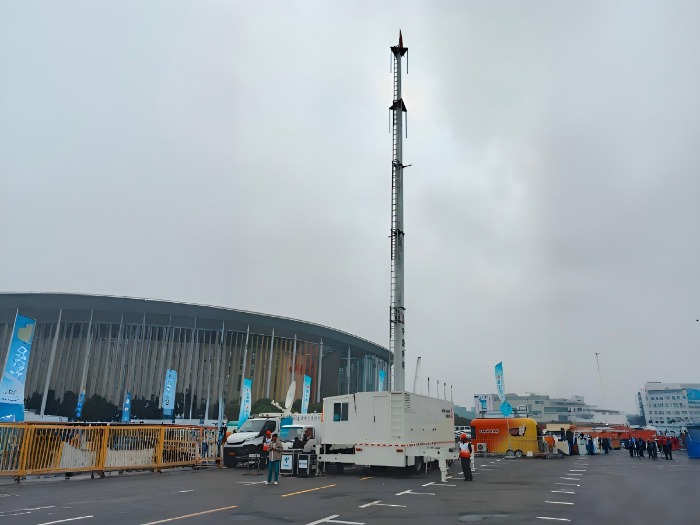
Emergency and public safety deployments offer recurring, predictable revenue through government contracts. Unlike events—which are episodic—emergency preparedness budgets are annual and ongoing.
The NSW Telco Authority model illustrates this: the government awarded a $2 million contract to Pivotel for the delivery and operation of four COW units, including a managed service framework with 24/7 monitoring, remote diagnostics, and scheduled maintenance.
Key revenue characteristics of emergency COW contracts:
· Readiness fees: The operator is paid to maintain the COW in a state of readiness, even when not deployed
· Deployment fees: Additional charges when the COW is activated for a disaster or emergency
· Managed service fees: Ongoing fees for monitoring, maintenance, and integration with emergency management protocols
· Multi-year contracts: Typically 3–5 year terms with renewal options
For governments, the business case is straightforward: a COW provides critical communication redundancy during disasters at a fraction of the cost of building and maintaining permanent backup infrastructure at every vulnerable location.
The multi-operator sharing model—adapting the proven tower sharing economics to COW deployment—is the most powerful lever for improving COW ROI.
Under a shared model, two to four operators mount their equipment on the same COW. The capital and operational costs are divided among tenants, dramatically reducing per-operator expenses.
The cost reduction mechanisms include:
| Cost Category | Shared Benefit | Typical Reduction |
|---|---|---|
| Equipment & Tower | Multiple operators share mast, antennas, and structural components | 50–60% per operator |
| Power Systems | Centralized generator/battery system serves all operators | 60–80% per operator |
| Site & Logistics | Single deployment location, shared transport costs | 60–70% per operator |
| Operations | Shared monitoring, maintenance, and staffing | 40–60% per operator |
A shared tenancy model on monopole towers has demonstrated that per-operator CAPEX/OPEX can be reduced by up to 90% for three operators compared to individual builds. While COW economics differ from permanent towers, the sharing principle applies: the more tenants per unit, the lower the cost for everyone.
For TowerCos and infrastructure providers, the shared COW model offers a compelling business case: a single COW asset generates revenue from multiple operators, improving asset utilization and accelerating payback.
Purchase Costs
A 25-meter event COW with telescopic mast, hydraulic deployment, dual antenna platforms, and integrated generator carries an EPC price range of $108,000–$148,500. Higher-capacity units with more advanced 5G equipment can exceed this range.
Rental Rates
Daily rental rates for a 5G COW range from a few hundred to several thousand dollars, with monthly and weekly rental options available. The rate depends on duration, included services, and configuration.
Operational Costs
Fuel is the largest ongoing cost. A diesel generator powering a COW can consume significant fuel, especially in hot climates where cooling demand is high. Hybrid energy systems—combining lithium batteries with reduced generator runtime—can cut fuel consumption by 60–80%. Maintenance and staffing add further OPEX.
ROI Scenarios
For an operator purchasing a COW at $130,000 and renting it at $1,500/day:
| Utilization Rate | Annual Revenue | Simple Payback |
|---|---|---|
| 100 days/year | $150,000 | ~1 year |
| 50 days/year | $75,000 | ~2 years |
| 20 days/year | $30,000 | ~5 years |
For emergency-focused COWs with annual readiness contracts, revenue is more predictable but deployment durations are shorter. The managed service model—where the provider charges a readiness fee plus deployment fees—provides the most stable revenue profile.
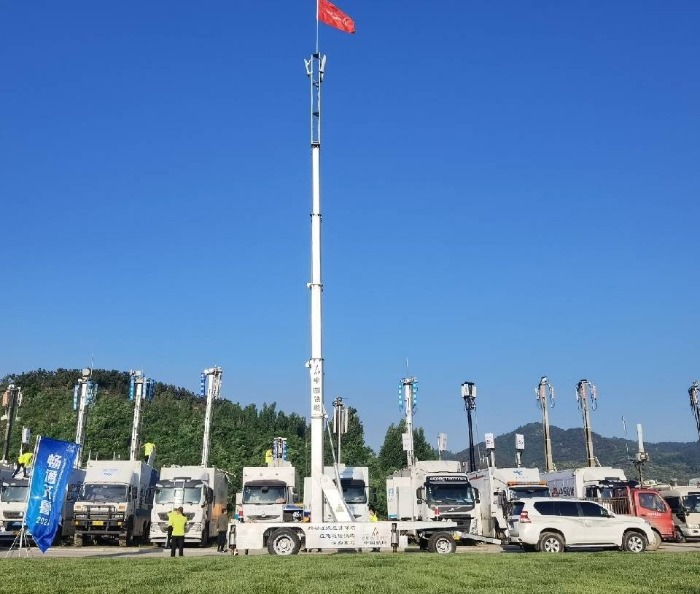
The global COW market was valued at approximately $2.48 billion in 2024** and is projected to reach **$5 billion by 2035, growing at a CAGR of 6.6%. Other market analyses place the current market at $4.8 billion** with projections to **$8.2 billion by 2033.
Growth is driven by:
· 5G densification: Higher frequencies and denser deployment requirements create coverage gaps that COWs can fill
· Increasing frequency of natural disasters: Climate change is driving demand for emergency communication resilience
· Government investment: Public safety agencies worldwide are investing in portable communication infrastructure
· Event economy growth: The live events industry continues to expand, creating recurring demand for temporary capacity
The NSW Telco Authority’s COW program provides a real-world economic case study. In September 2024, the Authority identified the need for rapidly deployable connectivity solutions for flood-prone regions. Through competitive procurement, it engaged Pivotel to deliver four self-powered, trailer-mounted COW units under a $2 million contract.
Each COW provides public Wi-Fi, emergency voice services, and coverage up to 500 meters via high-gain antennas on an 8-meter mast, with satellite backhaul via Starlink and/or OneWeb. The managed service framework includes 24/7 monitoring, remote diagnostics, and integration with NSW's emergency management protocols.
The COWs have been deployed in real-world scenarios including Cyclone Alfred and are maintained in a state of readiness for rapid mobilisation. For Pivotel, the contract provides predictable annual revenue through the managed service model. For the NSW government, the cost per COW ($500,000 including managed services over the contract term) is far lower than building permanent backup infrastructure at every vulnerable location.
| Revenue Model | Revenue Source | Predictability | Key Advantage |
|---|---|---|---|
| Event Rental | Event organizers / operators | Episodic | High day rates; repeatable across venues |
| Emergency Contract | Government agencies | Recurring (annual) | Predictable; readiness fees |
| Multi-Operator Shared | Multiple operators | Recurring (contract) | Lowest per-operator cost; scalable |
| Managed Service | Service provider contract | Very high | Lowest risk for asset owner |
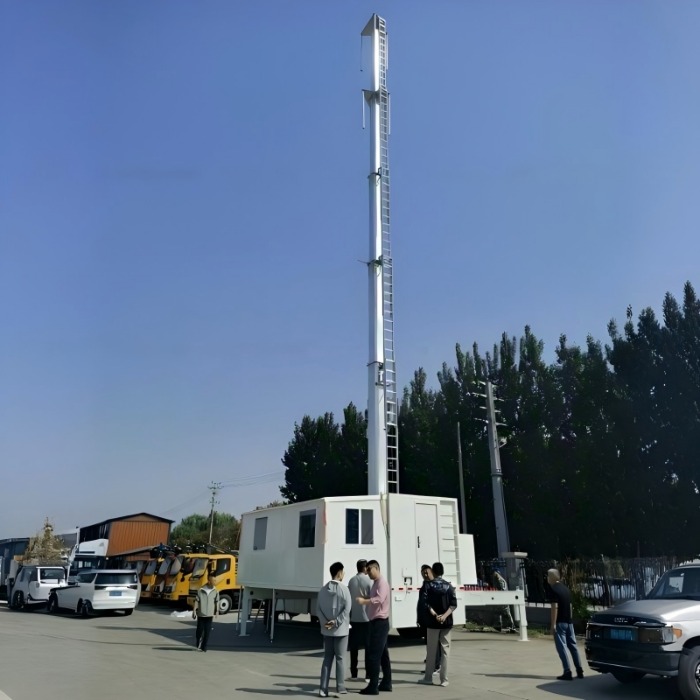
The business case for Cellular on Wheels is compelling—but only when the economics are properly understood. A COW is not a replacement for permanent infrastructure; it is a mobile, revenue-generating asset optimized for a specific range of deployment scenarios: events lasting days, emergencies lasting weeks, and temporary coverage gaps that permanent builds cannot economically address.
The most successful COW business models share three characteristics:
Diversified revenue streams: Combining event rental, emergency contracts, and shared tenancy to maximize utilization
Multi-operator sharing: Spreading costs across multiple tenants to achieve 50–90% per-operator savings
Managed service delivery: Reducing risk for asset owners through predictable, recurring contract revenue
As 5G densification accelerates and climate-driven emergencies increase, the demand for rapid, temporary capacity will only grow. Operators and infrastructure providers who build COW fleets—and who structure their deployment economics intelligently—will find that the mobile cell site is not merely a cost of doing business. It is a profitable line of business.
Ready to build your COW business case? Contact Qingdao Altai Tower's engineering team today for custom COW configurations, fleet economics analysis, and managed service consultation.



 Поддерживается сеть IPv6