

 English
 français
 español
 العربية
Поиск
Что Вы ищете?
Поиск

Гибридные методы изготовления угловых стальных конструкций в проектировании башен представляют собой стратегическое сочетаниестандартные горячекатаные угловые профилиипостроенные элементы(изготовленные из стальных пластин) в рамках единой башенной конструкции. Такой подход позволяет инженерам использовать экономичные и легкодоступные прокатные профили для элементов с меньшей нагрузкой, одновременно применяя более прочные составные профили, такие как крестообразные.Т-образные и звездообразные конфигурации—для сильно нагруженных элементов, где стандартных уголков недостаточно. В результате получается башня, отвечающая всем конструктивным требованиям, с оптимизированным использованием материалов, упрощенной процедурой изготовления и сниженной общей стоимостью. Благодаря выбору наиболее эффективного типа профиля для каждой конструктивной роли, гибридное изготовление обеспечивает экономию веса на 10–20% по сравнению с конструкциями, использующими исключительно прокатные или сборные элементы.
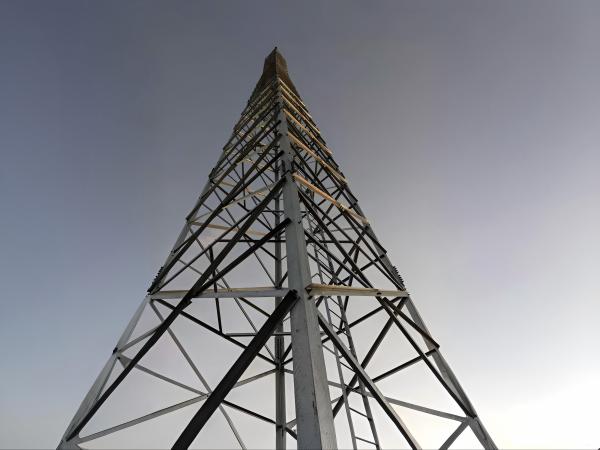
Прокатные профили представляют собой экономически оптимальный вариант:Стандартные горячекатаные уголки (Q235B, Q345B, Q420) обладают предсказуемыми механическими свойствами, проверенными правилами проектирования и экономичностью, что делает их доступными для большинства элементов башен.
Участники программы устраняют пробелы в потенциале:Когда отдельных уголков недостаточно для обеспечения достаточной несущей способности, составные профили (крестообразные, Т-образные, со звездообразными рейками) обеспечивают необходимую прочность без необходимости изготовления профилей нестандартных размеров на заказ.
Гибридная конструкция оптимизирует соотношение затрат и производительности:Применение правильного типа профиля в правильном месте — прокатные уголки для раскосов и второстепенных элементов, составные профили для сильно нагруженных опор и основных диагоналей — позволяет достичь оптимального баланса между стоимостью и конструктивной эффективностью.
Высокопрочная сталь усиливает это преимущество:Использование стали марки Q420 или выше в сборных элементах может еще больше снизить вес: исследования показывают снижение веса до 20% при замене стали S355 на S460 в аналогичных конструкциях.
Правила проектирования становятся более зрелыми:Недавние исследовательские проекты, такие как ANGELHY, разработали новые, экономичные правила проектирования как для отдельных уголков, так и для составных элементов, предоставляя инженерам надежные рекомендации по гибридным проектам.
При изготовлении могут быть разные требования:Прокатные профили требуют минимальной обработки; сборные элементы требуют дополнительных операций сварки, сверления и сборки — затраты, которые должны быть оправданы повышением эксплуатационных характеристик.
Традиционными строительными элементами решетчатых башен являются стандартные горячекатаные равносторонние уголки — с длиной сторон до 300 мм для высоких башен. Эти профили производятся на металлургических заводах в контролируемых условиях и обладают следующими характеристиками:
Предсказуемые механические свойства:Стабильная прочность на разрыв, пластичность и ударная вязкость.
Проверенные правила проектирования:Устоявшиеся методы расчета согласно Еврокоду 3, GB 50017 и ASCE/SEI 10-15
Экономическая эффективность:Благодаря эффекту масштаба производства, прокатные уголки являются наиболее экономичным вариантом для большинства элементов.
Доступность:Стандартные секции легко доступны у множества поставщиков.
К распространенным маркам стали относятся Q235B, Q355B и Q420, причем высокопрочные варианты все чаще используются в опорах линий электропередачи и телекоммуникационных сетей.
Составные элементы изготавливаются из стальных пластин или нескольких угловых профилей, соединенных вместе для образования композитного профиля с большей несущей способностью, чем любой отдельный прокатанный профиль. Типичные конфигурации включают:
| Конфигурация | Описание | Типичное применение |
|---|---|---|
| Крестообразный | Два угла, соединенные встык, образуют крестообразное сечение. | Первичные опоры высоковольтных линий электропередачи |
| Т-образная форма | Два угла, соединенные друг с другом в Т-образную конфигурацию. | Основные сжимающие элементы в высоких башнях |
| Звездообразный | Два угловых пояса, соединенных рейками. | Усиление существующих элементов; очень высокие нагрузки на сжатие. |
| Спина к спине | Два угла, соединенные вдоль их ног | Элементы, работающие на сжатие, где критически важна устойчивость к изгибу. |
Составные элементы особенно ценны в следующих случаях:
Требуемые размеры профиля превышают доступные размеры горячекатаных профилей.
Очень высокие нагрузки сжатия требуют большей грузоподъемности.
Существующие башни нуждаются в укреплении без замены всех элементов.
Для конкретных условий нагрузки необходимы индивидуально настроенные свойства сечения.
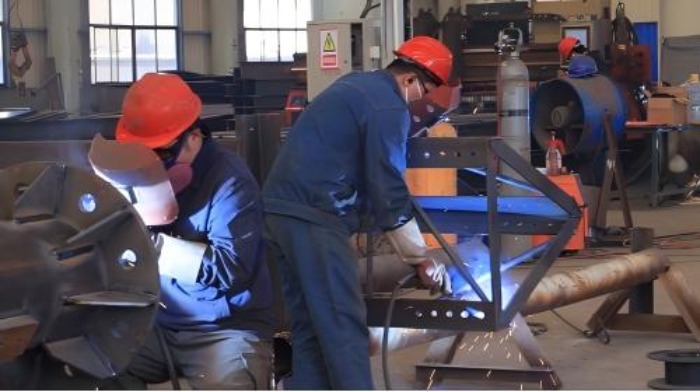
Основной принцип гибридного производства заключается в следующем:выбор наиболее эффективного типа сечения для каждой конструктивной ролиВ типичной решетчатой башне:
| Область башни | Типичный тип участника | Обоснование |
|---|---|---|
| Основные опоры (нижние секции) | Насыпной (крестовидный или звездчатый) | Наибольшие нагрузки сжатия требуют максимальной несущей способности. |
| Основные опоры (верхние секции) | Уголки, изготовленные методом прокатки (больших размеров) | Нагрузка уменьшается с высотой; достаточно рулонных профилей. |
| Основные диагонали | Прокатные уголки или сборные профили (для зон с высокой нагрузкой) | Стандартные уголки для большинства случаев; рассчитаны на экстремальные нагрузки. |
| Вторичные распорки | Уголки, накатанные (меньших размеров) | Низкая загрузка; первостепенное значение имеет экономическая эффективность. |
| Перекладины | Накатанные уголки | Умеренные нагрузки; стандартные секции экономичны. |
Такой поэтапный подход — более тяжелые составные секции у основания, где нагрузки максимальны, и переход к более легким прокатным секциям ближе к вершине — имитирует естественное распределение нагрузки в консольной башне и оптимизирует использование материалов по всей конструкции.
Решение о выборе сборного элемента вместо прокатного уголка обусловлено несколькими факторами:
· Section availability:When the required section size is not economically available as a hot-rolled product
· Buckling considerations:When the effective slenderness of a single angle is too high, and a built-up section provides better stability
· Strengthening existing towers:When adding capacity to an in-service tower without replacing primary members
The economic trade-off between rolled and built-up members is not always straightforward:
· Rolled sectionshave lower fabrication costs but may require more material if the section must be oversized to meet capacity requirements
· Built-up membershave higher fabrication costs (welding, drilling, assembly) but can achieve the required capacity with less material
Research has shown that the factor with the highest contribution to decision-making between built-up and hot-rolled proposals isthe base price of raw material for each optionin the market. When steel prices are high, the material savings of built-up members become more attractive; when fabrication costs dominate, rolled sections may be preferred.
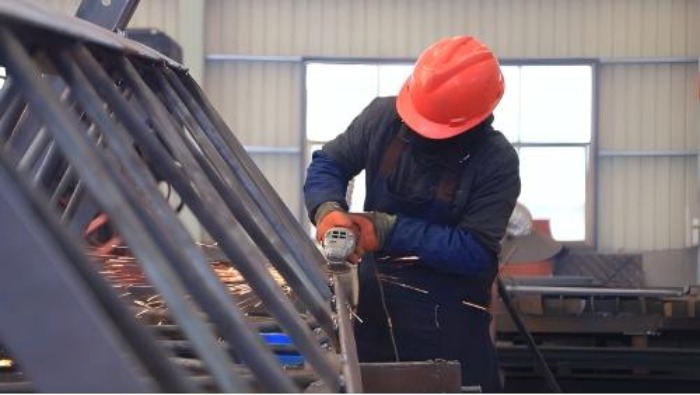
The use of high-strength steel grades—particularly Q420—has transformed the economics of hybrid fabrication. In extra-high-voltage transmission towers, Q420 large-size angle steel can often substitute for double-spliced or multi-spliced common angle steel members, reducing fabrication by multiples and significantly decreasing the number of connection bolts and filler plates.
The ANGELHY research project demonstrated that using S460 high-strength steel (comparable to Q420) in a typical transmission tower reduced total weight from 66 tonnes to 56 tonnes—a saving of over 15%. More broadly, high-strength steel can reduce the weight of standardized towers by up to 20% compared to normal steel grades (e.g., S355/Q345), resulting in lighter structures that are easier and faster to erect.
However, high-strength steels present fabrication challenges:
· Drilling required for Q420:Punching is generally not recommended; holes must be drilled
· Welding restrictions:Welding operations should be avoided where possible for Q420B high-strength steel
· Design rule gaps:Some standards (e.g., EN 50341) do not include high-strength steel grades, requiring reference to other codes
Several standards govern the design of rolled and built-up members in lattice towers:
| Standard | Scope | Relevance |
|---|---|---|
| GB 50017 | Steel structure design | T-shaped and cruciform sections; equivalent slenderness for torsional and flexural-torsional buckling |
| ASCE/SEI 10-15 | Latticed steel transmission structures | Design of members, connections, and overall stability |
| EN 1993-3-1 | Towers, masts, and chimneys | Design rules for towers and masts |
| EN 50341-1 | Overhead electrical lines | Transmission tower design (S235 and S355 only in some national annexes) |
The ANGELHY project (2017–2020), funded by the European Commission, specifically addressed the design of both single angle and built-up members in lattice towers. Key outcomes include:
New economic design rules for single angle and built-up members
Improved rules for built-up sections, includinginnovative types composedof two angles with unequal sections
Testing on lattice towers with high-strength steel (S460)
Testing of hybrid members (steel angles reinforced with CFRP strips)
Design recommendations for Eurocode 3
The project confirmed thatbuilt-up members provide a cost-effective solution for strengthening existing towersand for new designs requiring higher capacity than available rolled sections.
Designing built-up members requires attention to several factors not present in single-angle design:
· Shear effects:Built-up compression members exhibit extra flexibility due to shear action, affecting overall stability
· Connector spacing:The distance between batten plates or filler plates must be sufficient to ensure composite action
· Local buckling:Plate elements in built-up sections must satisfy width-to-thickness (b/t) ratio requirements
· Modeling considerations:In structural analysis programs like SAP2000, built-up members are typically modeled as single member elements with double-section cross-sections
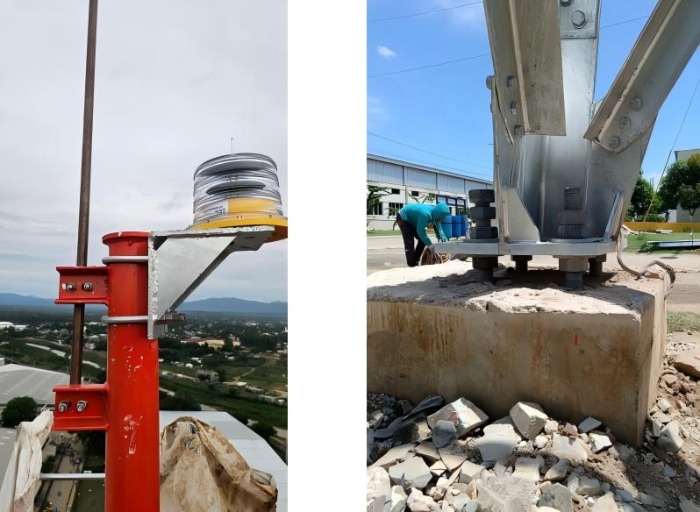
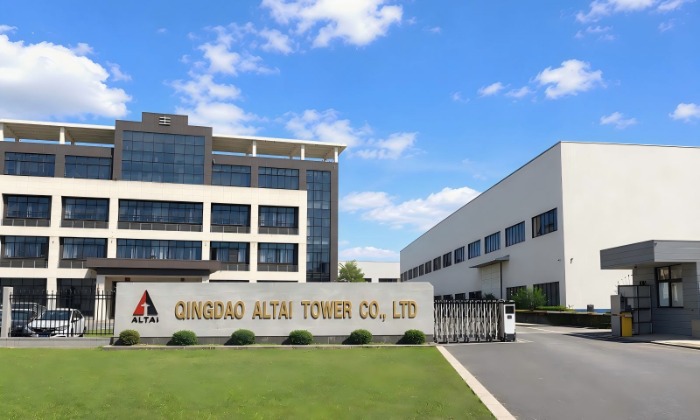
Qingdao Altai Tower Co., Ltd. is a professional manufacturer of telecommunication towers, power towers, and tower accessories, established in 2003. The company specializes in the design, manufacturing, and installation of steel towers, with products exported to more than 100 countries and regions.
| Capability | Specification |
|---|---|
| Rolled section processing | CNC angle production lines for punching and cutting standard angles |
| Built-up member fabrication | 4000-ton hydraulic CNC bending machine for high-strength, high-precision components |
| Welding | AWS D1.1-compliant welding for built-up section assembly |
| Galvanizing | In-house workshop with Italian equipment, strictly following ASTM A123 |
| Quality control | Full traceability; trial assembly verification |
| Lead time | 30 days after payment |
Qingdao Altai Tower applies hybrid fabrication principles through:
· Section optimization:Selecting the most efficient section type (rolled or built-up) for each structural role based on load analysis
· High-strength steel integration:Using Q345B and Q420 grades to achieve weight savings in critical members
· CNC precision:Ensuring accurate connections for both rolled and built-up members
· Trial assembly:Verifying that hybrid designs assemble correctly before shipment
| Parameter | Hot-Rolled Angle | Built-Up Member |
|---|---|---|
| Fabrication complexity | Low—standard mill production | Higher—welding, drilling, assembly required |
| Material cost | Lower per unit weight | Higher per unit weight (additional fabrication) |
| Section size range | Limited to mill capabilities (up to ~300mm leg) | Virtually unlimited—can be designed for any required capacity |
| Lead time | Shorter—readily available | Longer—custom fabrication required |
| Quality consistency | High—controlled mill conditions | Depends on fabrication quality; more potential for defects |
| Design rules | Well-established; covered in all major codes | Maturing; specific rules in ASCE/SEI 10-15 and ANGELHY recommendations |
| Weight efficiency | Good for standard loads | Excellent for high loads—material only where needed |
| Best application | Bracing, secondary members, moderate loads | Primary legs, very high compression loads, strengthening |
Hybrid fabrication—the strategic combination of standard hot-rolled angles and built-up members—represents a sophisticated evolution in lattice tower design. By applying rolled sections where they are most economical and built-up members where capacity demands it, engineers can achieve towers that are:
Structurally efficient:Meeting all load requirements with optimized material usage
Cost-effective:Minimizing both material and fabrication costs
Adaptable:Addressing capacity gaps where standard sections are insufficient
Future-proof:Capable of strengthening existing towers without complete replacement
Research projects like ANGELHY have provided the design rules and validation needed to implement hybrid designs with confidence. High-strength steels such as Q420 and S460 further amplify the benefits, enabling weight reductions of up to 20%.
Для владельцев проектов и инженеров выбор очевиден: жесткая зависимость только от прокатных или сборных элементов больше не является необходимой. Гибридные технологии изготовления предлагают оптимальный путь — использование правильного типа элементов в правильном месте и с правильной маркой стали — для создания более прочных, легких и экономичных башен.
Готовы оптимизировать конструкцию вашей башни с помощью гибридных технологий? Свяжитесь с инженерной командой Qingdao Altai Tower сегодня, чтобы получить индивидуальную оптимизацию сечения, интеграцию высокопрочной стали и подробное коммерческое предложение.



 Поддерживается сеть IPv6